The BRICS hedges dollar weaponization
Increased dollar weaponization has prompted some BRICS members to reduce exposure to dollar-centric infrastructure through local-currency settlement, interoperable payment systems, and alternative financial channels. But these efforts remain fragmented, bilateral, and experimental.


The US dollar’s central role and preeminent position in the international monetary system have conferred what Valéry Giscard d’Estaing, the French Finance Minister in the 1960s, once called an “exorbitant privilege.” Giscard was referring to the United States’ ability to finance persistent current-account deficits on favorable terms while projecting geopolitical power through control of the dominant payments infrastructure.
Since Russia’s invasion of Ukraine in 2022, Washington has stepped up efforts to exploit this infrastructure – most notably by excluding sanctioned Russian entities from the Society for Worldwide Interbank Financial Telecommunication (SWIFT) messaging network and imposing secondary sanctions on non-US entities – to advance foreign-policy objectives.
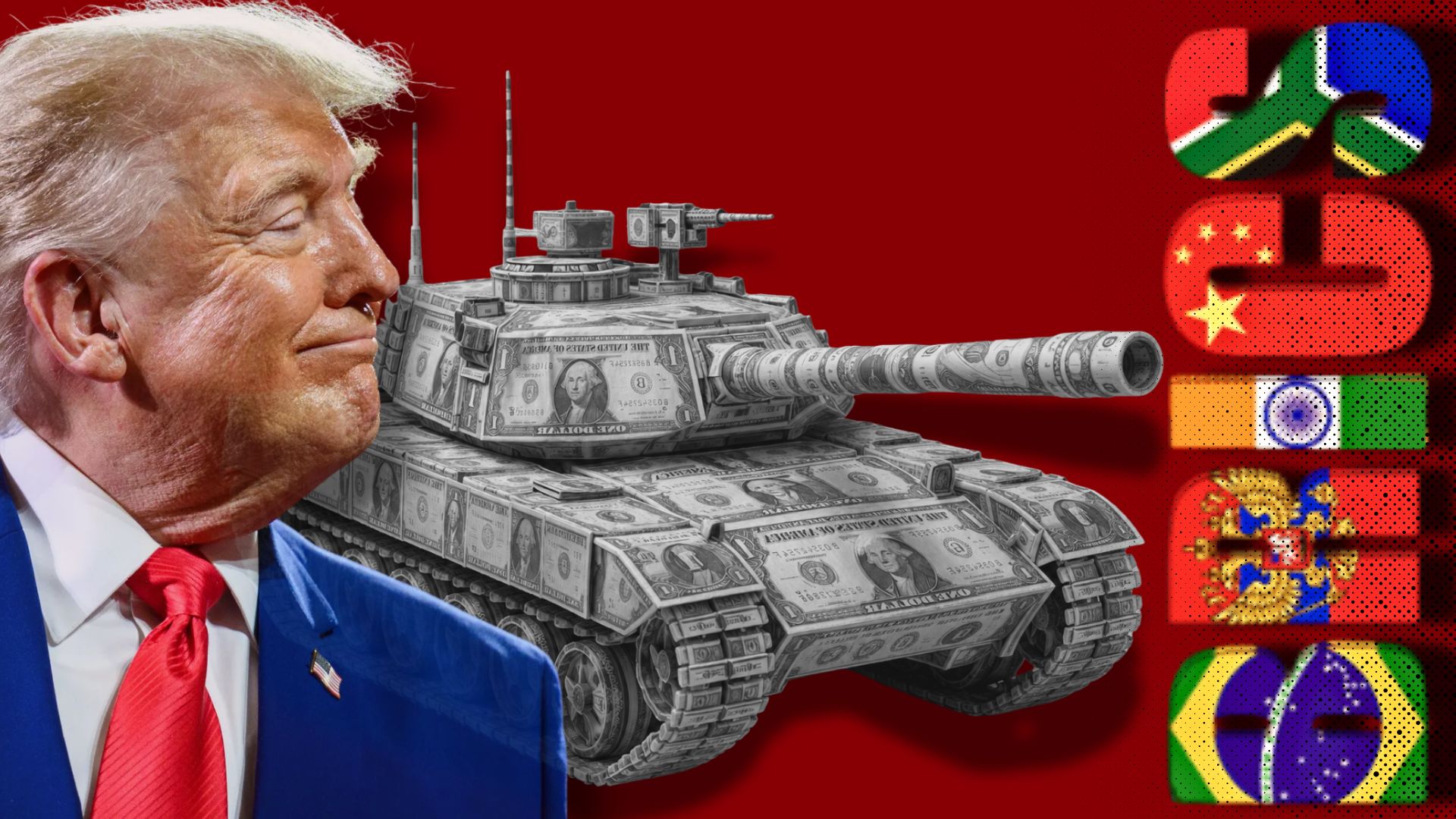
Indeed, the United States has a long tradition of using the greenback as an instrument of economic statecraft, and increasingly, as a financial weapon. Under the second Trump administration, the U.S. government has increasingly used the dollar, as a tool of economic warfare, to confront geoeconomic rivals such as China, Russia, and Iran.
Since taking office, Trump has floated the idea of tariffs – sometimes pitched at a stagging 100% – against countries seen as moving away from the dollar. Since 2025, Trump’s government has initiated secondary tariffs on Indian imports to punish New Delhi’s continued purchases of Russian oil.
But sanctions and tariffs increase the perceived political cost of relying on dollar-based infrastructure, thereby encouraging exposed states, particularly some BRICS countries, to accelerate efforts toward reducing their exposure to the greenback.
Now trade between Russia and China is overwhelmingly settled in national currencies, namely rubles and yuan; and India has expanded rupee-based mechanisms for energy imports to reduce dependence on the US dollar. In 2023, China and Brazil signed an agreement to “eliminate the US dollar as an intermediary currency and instead settle trade in their local currencies.” Such arrangements reduce exposure to sanctions and lower certain transaction costs, yet they remain fragmented and do not yet scale into a unified rival to SWIFT.
Because much of their export trade remains invoiced in dollars, South Africa and Brazil have remained cautious about embracing de-dollarization. Fearing Trump’s tariff threat against countries aiming to “destroy the dollar,” other BRICS members, such as Egypt, Ethiopia, and Indonesia, have supported BRICS’s de-dollarization, yet none is pursuing a radical shift away from the dollar.
Institutional responses within BRICS further illustrate the limits of joint effort. At the July 2025 summit, BRICS agreed to work toward better interoperability between members’ payment systems. But no tangible progress has been made toward a common BRICS currency, or a full-fledged, universally adopted alternative to the SWIFT banking system.
At the same time, the New Development Bank has increased the amount of its loans given in the currencies of its member countries. But the goal of reaching about 30 percent of its lending in these currencies is still more of an aspiration than a major change.
China’s Cross-Border Interbank Payment System (CIPS) has expanded “to reduce currency risks and improve liquidity management,” yet its transaction volume and global adoption remain a small fraction of SWIFT’s.
Divisions among BRICS members are important seamy sides, not to be defined away. Russia’s newly found inferior complex to China, the not so hidden China-India rivalry, and Brazil’s insistence on being a balancer between China and India and between Russia and China rather than merely a helper to China are impediments to cooperation. Even though Beijing and Moscow are free to push for a common BRICS currency, “divergent national interests, varying levels of economic development, and fear of US retaliation, including tariff threats,” continue to impinge on the progress toward de-dollarization.
Very consequential monetary actions, such as a common currency or deeply integrated payment architecture, would require a level of trust, policy coordination, and entrenched partnership that BRICS does not yet possess. In this sense, BRICS functions more as a club for expressing dissatisfaction with dollar dominance than as a cohesive financial coalition capable of replacing it.
It’s fair to say that the U.S. intensification of dollar weaponization since 2022 has backfired, hastening the shift from using the currency in targeted bilateral corridors and within BRICS experimental channels, producing conducive environment for the internationalization of the renminbi, especially in payments and bilateral settlement. It may also render longer-term costs for U.S. financial hegemony by encouraging reserve diversification, complicating demand for U.S. assets and accelerating a more fragmented payments landscape.
While Washington’s sanctions generate political incentives for alternatives to the dollar, they do not automatically create the institutional arrangement, such as a large and liquid financial market, trusted institutions and legal protections, global payment networks, required for genuine substitution. Network externalities, however, continue to favor the dollar.
The greenback retains its dominant role, “accounting for 56% of global foreign exchange reserves and involved in 89% of global foreign exchange market trades,” not merely through inertia but because alternatives encounter shortcomings. The euro remains hobbled by an incomplete fiscal union among member states, the renminbi by strict and selective capital controls, and any BRICS-based cross-border payment system by institutional asymmetries, such as variances in regulatory frameworks, macroeconomic priorities, technological capacity, and competing geopolitical priorities among member states.
This limitation also reflects a political distinction that some states may draw between episodic U.S. policy volatility and the deeper institutional foundations of American monetary power. Governments unsettled by Trump-era tariffs, sanctions, and threats against de-dollarization may still hesitate to treat U.S. monetary leadership as permanently unreliable. For BRICS countries, Trump may be read less as a new normal setter than as an aberration. Hence, they may not yet believe U.S. financial coercion is permanent enough to justify the costs of radical substitution. As such, they may hedge against dollar dependence, but remain reluctant to abandon a system that continues to offer unmatched liquidity, legal protections, and network advantages.
The US dollar’s central role and preeminent position in the international monetary system have conferred what Valéry Giscard d’Estaing, the French Finance Minister in the 1960s, once called an “exorbitant privilege.” Giscard was referring to the United States’ ability to finance persistent current-account deficits on favorable terms while projecting geopolitical power through control of the dominant payments infrastructure.
Since Russia’s invasion of Ukraine in 2022, Washington has stepped up efforts to exploit this infrastructure – most notably by excluding sanctioned Russian entities from the Society for Worldwide Interbank Financial Telecommunication (SWIFT) messaging network and imposing secondary sanctions on non-US entities – to advance foreign-policy objectives.
Indeed, the United States has a long tradition of using the greenback as an instrument of economic statecraft, and increasingly, as a financial weapon. Under the second Trump administration, the U.S. government has increasingly used the dollar, as a tool of economic warfare, to confront geoeconomic rivals such as China, Russia, and Iran.
Since taking office, Trump has floated the idea of tariffs – sometimes pitched at a stagging 100% – against countries seen as moving away from the dollar. Since 2025, Trump’s government has initiated secondary tariffs on Indian imports to punish New Delhi’s continued purchases of Russian oil.
But sanctions and tariffs increase the perceived political cost of relying on dollar-based infrastructure, thereby encouraging exposed states, particularly some BRICS countries, to accelerate efforts toward reducing their exposure to the greenback.
Now trade between Russia and China is overwhelmingly settled in national currencies, namely rubles and yuan; and India has expanded rupee-based mechanisms for energy imports to reduce dependence on the US dollar. In 2023, China and Brazil signed an agreement to “eliminate the US dollar as an intermediary currency and instead settle trade in their local currencies.” Such arrangements reduce exposure to sanctions and lower certain transaction costs, yet they remain fragmented and do not yet scale into a unified rival to SWIFT.
Because much of their export trade remains invoiced in dollars, South Africa and Brazil have remained cautious about embracing de-dollarization. Fearing Trump’s tariff threat against countries aiming to “destroy the dollar,” other BRICS members, such as Egypt, Ethiopia, and Indonesia, have supported BRICS’s de-dollarization, yet none is pursuing a radical shift away from the dollar.
Institutional responses within BRICS further illustrate the limits of joint effort. At the July 2025 summit, BRICS agreed to work toward better interoperability between members’ payment systems. But no tangible progress has been made toward a common BRICS currency, or a full-fledged, universally adopted alternative to the SWIFT banking system.
At the same time, the New Development Bank has increased the amount of its loans given in the currencies of its member countries. But the goal of reaching about 30 percent of its lending in these currencies is still more of an aspiration than a major change.
China’s Cross-Border Interbank Payment System (CIPS) has expanded “to reduce currency risks and improve liquidity management,” yet its transaction volume and global adoption remain a small fraction of SWIFT’s.
Divisions among BRICS members are important seamy sides, not to be defined away. Russia’s newly found inferior complex to China, the not so hidden China-India rivalry, and Brazil’s insistence on being a balancer between China and India and between Russia and China rather than merely a helper to China are impediments to cooperation. Even though Beijing and Moscow are free to push for a common BRICS currency, “divergent national interests, varying levels of economic development, and fear of US retaliation, including tariff threats,” continue to impinge on the progress toward de-dollarization.
Very consequential monetary actions, such as a common currency or deeply integrated payment architecture, would require a level of trust, policy coordination, and entrenched partnership that BRICS does not yet possess. In this sense, BRICS functions more as a club for expressing dissatisfaction with dollar dominance than as a cohesive financial coalition capable of replacing it.
It’s fair to say that the U.S. intensification of dollar weaponization since 2022 has backfired, hastening the shift from using the currency in targeted bilateral corridors and within BRICS experimental channels, producing conducive environment for the internationalization of the renminbi, especially in payments and bilateral settlement. It may also render longer-term costs for U.S. financial hegemony by encouraging reserve diversification, complicating demand for U.S. assets and accelerating a more fragmented payments landscape.
While Washington’s sanctions generate political incentives for alternatives to the dollar, they do not automatically create the institutional arrangement, such as a large and liquid financial market, trusted institutions and legal protections, global payment networks, required for genuine substitution. Network externalities, however, continue to favor the dollar.
The greenback retains its dominant role, “accounting for 56% of global foreign exchange reserves and involved in 89% of global foreign exchange market trades,” not merely through inertia but because alternatives encounter shortcomings. The euro remains hobbled by an incomplete fiscal union among member states, the renminbi by strict and selective capital controls, and any BRICS-based cross-border payment system by institutional asymmetries, such as variances in regulatory frameworks, macroeconomic priorities, technological capacity, and competing geopolitical priorities among member states.
This limitation also reflects a political distinction that some states may draw between episodic U.S. policy volatility and the deeper institutional foundations of American monetary power. Governments unsettled by Trump-era tariffs, sanctions, and threats against de-dollarization may still hesitate to treat U.S. monetary leadership as permanently unreliable. For BRICS countries, Trump may be read less as a new normal setter than as an aberration. Hence, they may not yet believe U.S. financial coercion is permanent enough to justify the costs of radical substitution. As such, they may hedge against dollar dependence, but remain reluctant to abandon a system that continues to offer unmatched liquidity, legal protections, and network advantages.
Từ khoá: BRICS weaponization US dollar Donald Trump tariffs